By Thiago Schmitz | Enterprise Architect, Salesforce Core at Cloudgaia
In my 29 years working across IT and Telecom — implementing CRM solutions for industries ranging from Oil & Gas to Consumer Goods — I have seen the contact center evolve from a cost center into one of the most strategically important touchpoints in the entire customer journey.
But I have never seen a shift as significant as what is happening right now with the introduction of Agentforce Contact Center by Salesforce.
The Problem We Have Always Had
For years, contact centers have suffered from the same structural challenge: data fragmentation. A customer calls in, and the rep has no idea they just clicked on a marketing email or that they have an open opportunity with the sales team. The result is friction — for the customer and for the business.
According to Salesforce’s own State of Service report, 80% of customers say the experience a company provides is as important as its products. Yet most service teams still operate in silos, disconnected from the commercial context that would allow them to deliver truly personalized interactions.
What Agentforce Contact Center Actually Changes
Agentforce Contact Center does not simply add AI to an existing contact center model. It fundamentally redesigns the operating architecture.
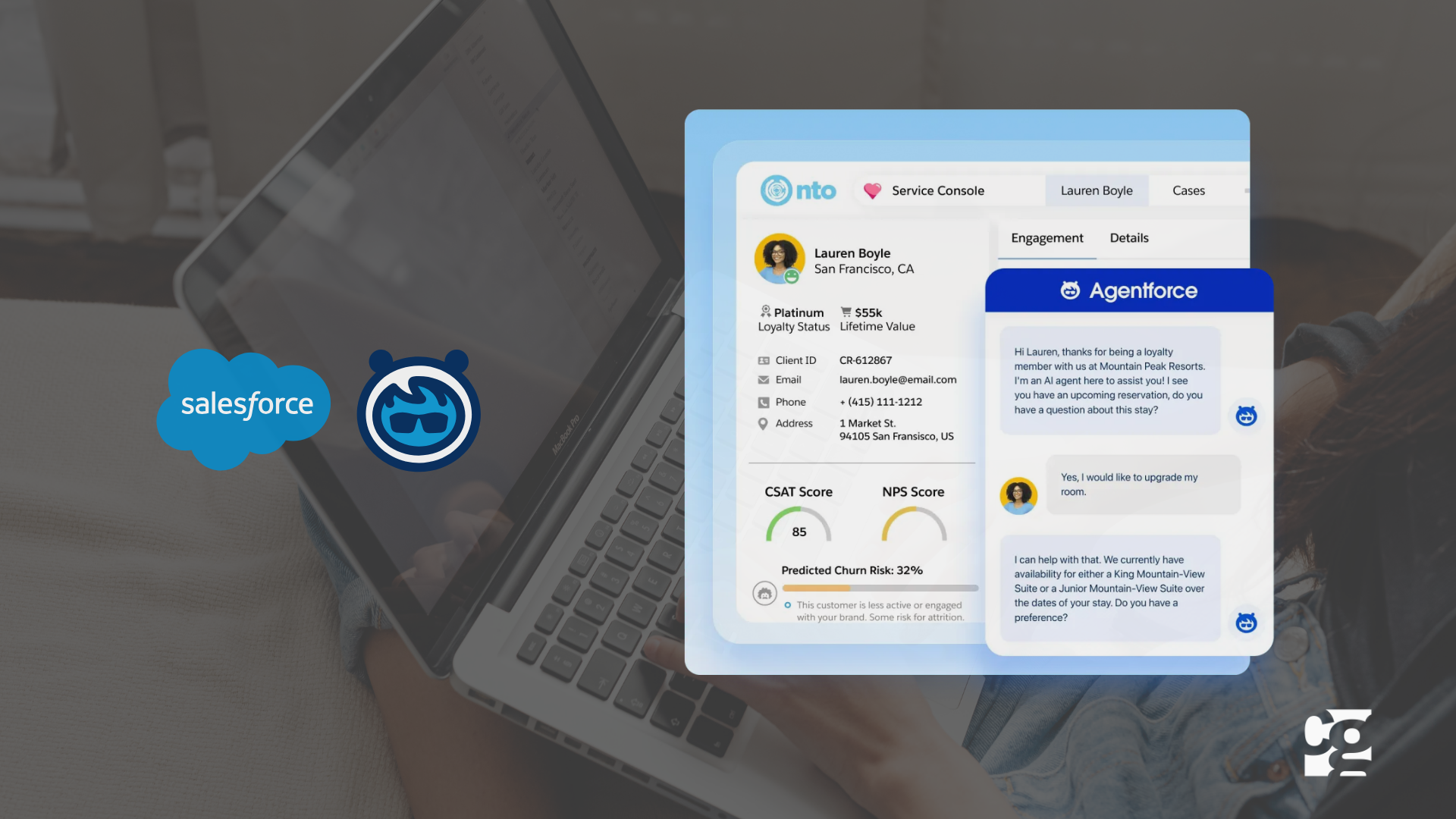
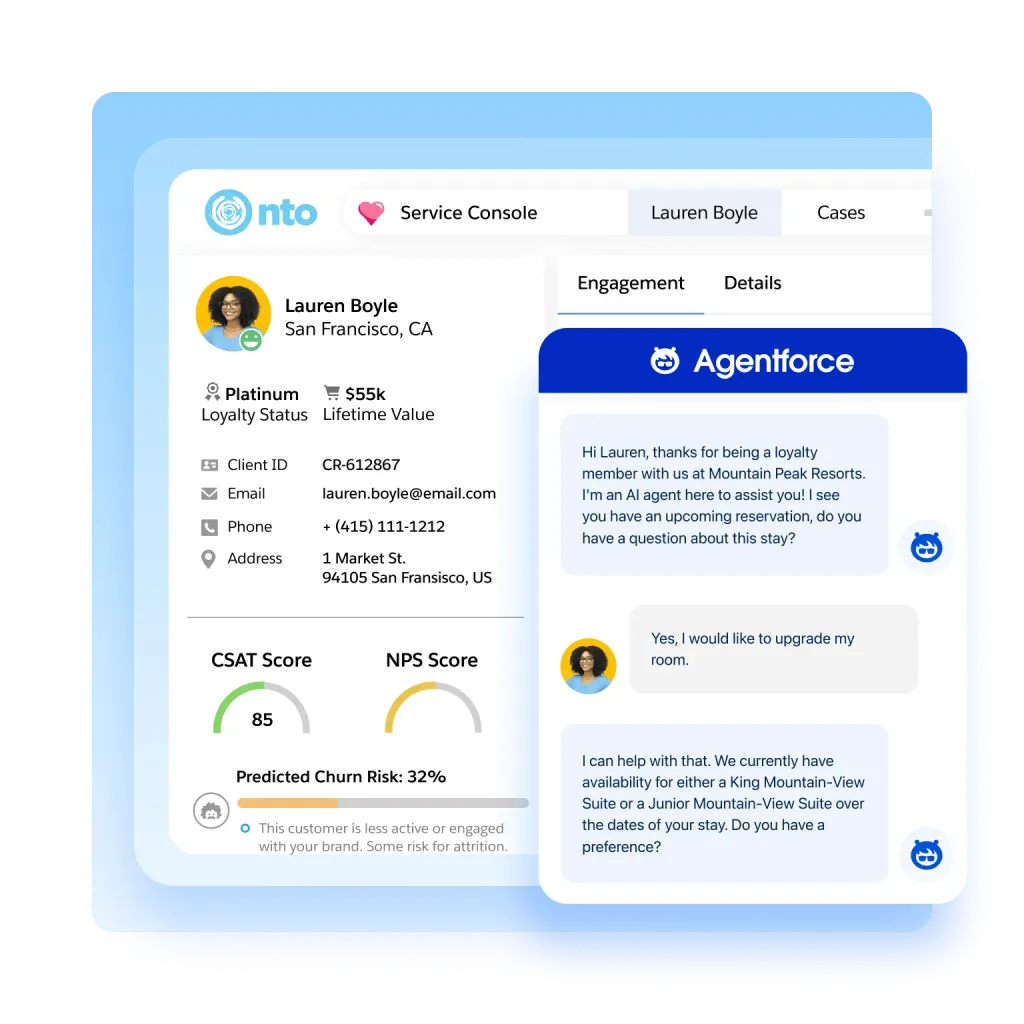
At its core, it unifies three things that have historically lived in separate systems: the CRM & legacy data, the communication channels, and the AI layer. This means that whether a customer reaches out via phone, chat, or WhatsApp, the platform already knows who they are, what they have purchased, what campaigns they have engaged with, and what issues they have previously raised.
When the AI agent handles the interaction, it does so with full context. When it needs to escalate to a human rep, the handoff is seamless — the rep receives a full transcript, a 360-degree customer view, and AI-generated guidance on how to resolve the issue quickly.
From a technical perspective, this is the result of Salesforce deeply integrating Data Cloud, Service Cloud, and Agentforce into a single unified platform — something that previously required complex middleware, custom integrations & automations, and an imprecise AI.
Why This Matters for Organizations
In my experience, customer service is often where revenue is either protected or lost. A delayed resolution, a lack of context, a rep or agent who cannot see the customer’s full history — these are not just service failures. They are commercial risks.
Agentforce Contact Center addresses this directly. By giving every agent — human or AI — access to the full customer picture, organizations can finally deliver the kind of proactive, personalized service that builds loyalty and reduces churn.
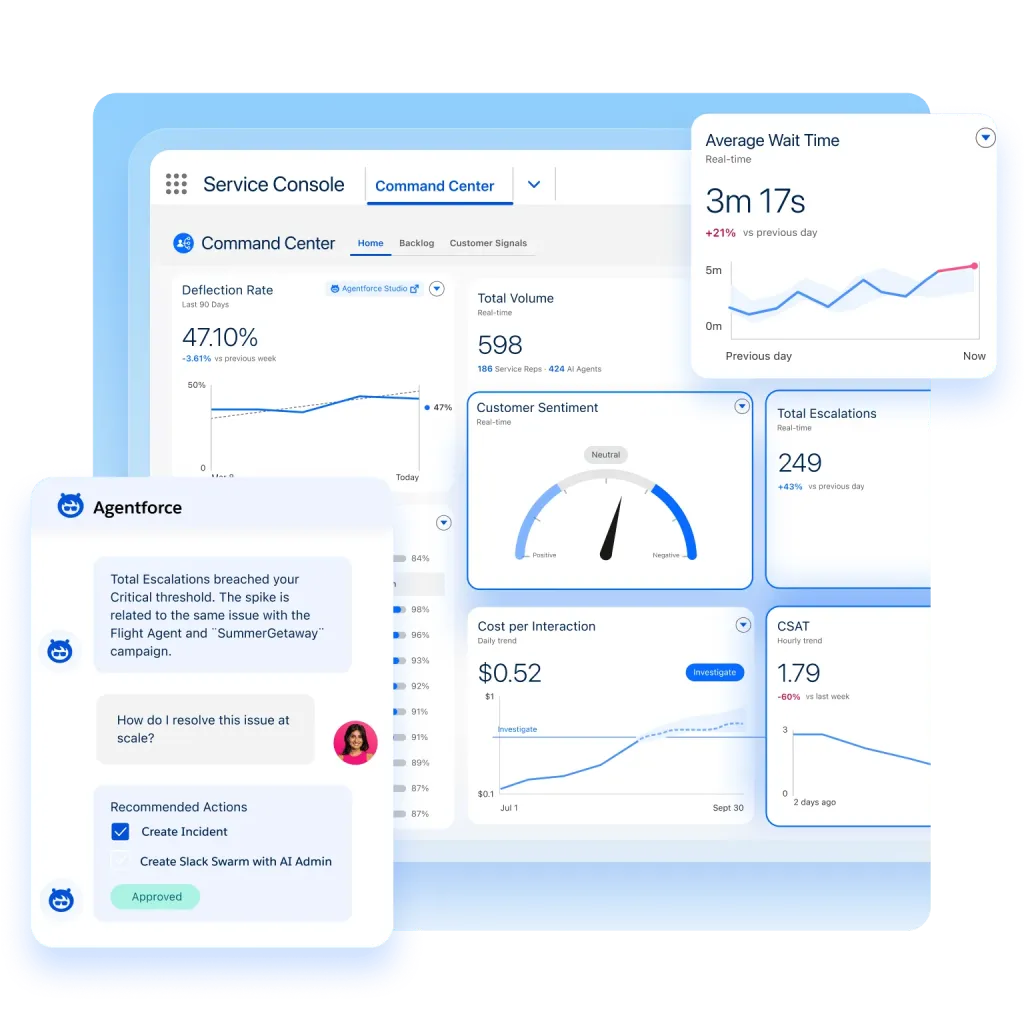
And from an operational standpoint, the unified reporting and supervisor dashboard means that contact center leaders can track performance across digital and human agents in real time, identify resolution trends, and continuously improve their workforce strategy.
The Human Element Remains Essential
I want to be clear about one thing: Agentforce Contact Center is not a strategy to eliminate human agents. It is a strategy to make them more effective.
The AI handles the high-volume, repetitive interactions with speed and consistency. The human rep steps in for the complex, emotionally nuanced conversations that require judgment, empathy, and relational intelligence. Both are necessary. The platform is designed to orchestrate them intelligently.
As someone who holds both the Agentforce Specialist and Service Cloud Consultant certifications, I can tell you that the real strategic value goes beyond implementation decisions around routing logic, agent configuration, and escalation thresholds. The technology is powerful — but it needs architects who understand the business to unlock its full potential.
A New Standard for Service Excellence
The organizations that will lead in customer experience over the next five years are the ones that stop thinking about contact centers as a reactive support function and start designing them as proactive, data-driven engagement engines.
Agentforce Contact Center gives you the platform to do exactly that. The question is not whether to adopt it — it is how quickly you can align your processes, your people, and your data to take full advantage of it.
If your organization is evaluating how to modernize its service model, I would welcome the opportunity to share how Cloudgaia has approached this transformation for clients across different industries.