

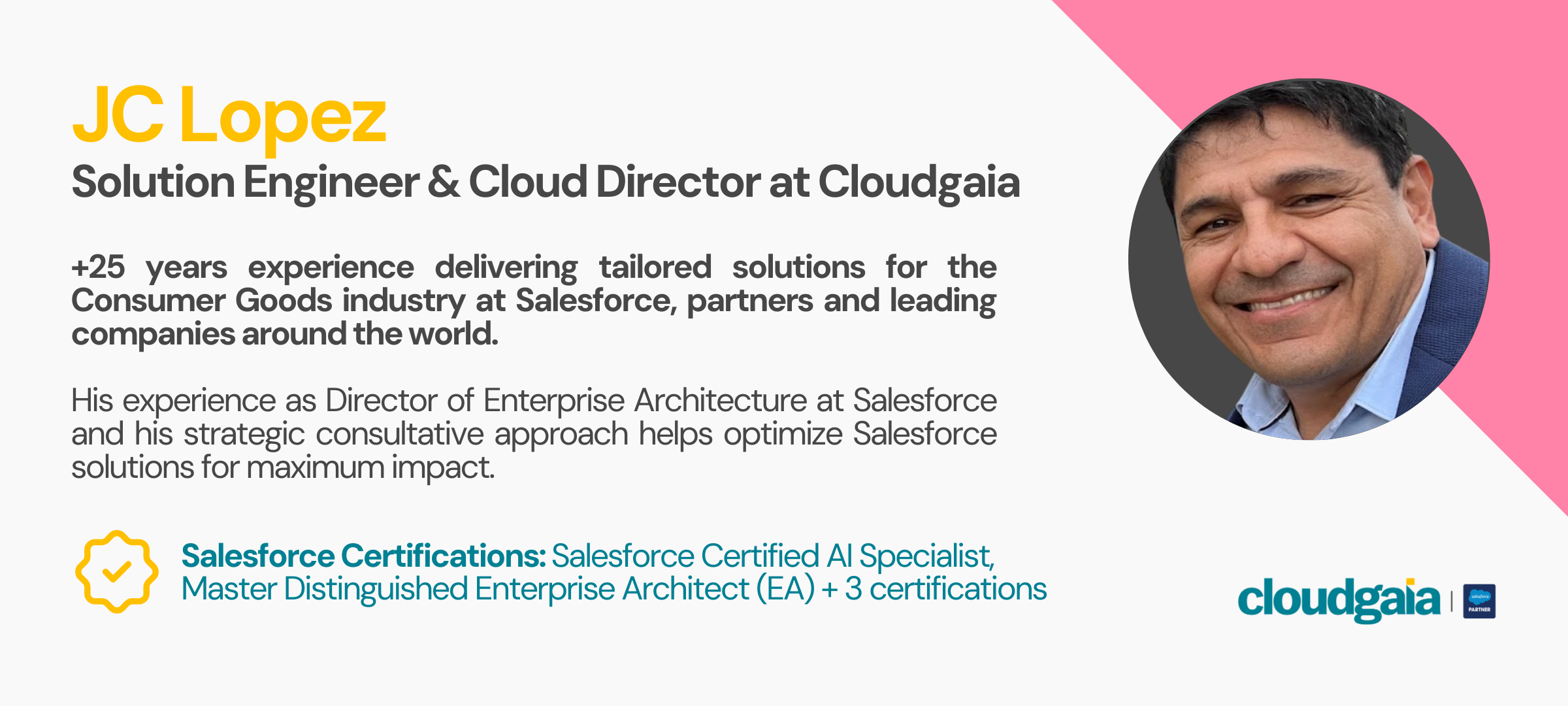
By Juan Carlos Lopez, Solution Engineering Director & Senior Enterprise Architect Practitioner
Every Executive Conversation Comes Back to the Business Value of Technology. Over 25 years advising and listening to leaders across consumer goods, healthcare, insurance, financial services, and telecom, the conversation I find myself having most often isn’t about technology.
It’s about value. Is this investment worth it?
And after two decades sitting across the table from executives at some of the largest organizations in these industries, my answer is always the same. The better question is what it is costing you right now not to make it. That is where the business value of technology conversation really begins.
| The better question is what it is costing you right now not to make it. |
The Pattern Executives Recognize Across Industries
In every advisory engagement, regardless of industry, I hear the same story told in different words. The organization is growing. New markets are opening. The team is working harder than ever. And yet, somewhere in the operation, there is a ceiling, invisible until you hit it.
Field and outreach teams spend half their day on manual verification instead of the customers and patients in front of them. Retention happening reactively, with leadership finding out a customer or patient churned when the report arrived, not before. Commission reconciliation consuming days of management time every month. No real-time visibility into what is actually happening in the business until it is already a problem.
In healthcare, the leaders I’ve advised describe it with particular clarity.
“We are opening new clinics, expanding into new markets, doing everything right on the growth side, and our teams are still chasing appointments in spreadsheets and discovering chargebacks at month end.”
That is not a technology problem. That is an operating model that has not evolved with the business.
The Hidden Cost of Delaying the Business Value of Technology
Organizations rarely calculate the true cost of their current operating model. They scrutinize every line of a technology investment proposal. They rarely apply the same rigor to the daily drain of the system they are already running.
But the cost is there. And it compounds quietly, every single day.
Every manual process takes three hours instead of thirty minutes. Every patient or customer who left because no one followed up fast enough. Every chargeback discovered at month-end instead of prevented in real time. Every commission dispute that took days to resolve. Every strategic decision made on data that was already a week old.
In Medicare Advantage organizations I have advised, the retention team was typically finding out about disenrollments through a monthly carrier report. By the time they called the patient, it was already too late. That is not a failure of effort. Those teams were working incredibly hard. That is a measurable business cost, multiplied by every patient, every month, across every market.
The question was never whether they could afford to invest in a better platform.
The question was how much they were losing every month by not doing it.
| The question was never whether they could afford to invest in a better platform. The question was how much they were losing every month by not doing it. |
Where the Business Value of Technology Shows Up in Operations
When organizations make the decision to connect their operating model, integrating patient and customer journey, enrollment, retention, and commission management on a single platform, the return shows up in places that are concrete and measurable.
Retention rate improvement. Proactive outreach triggered by real-time signals retains patients and customers who would otherwise have churned. In Medicare Advantage, a single percentage point improvement in retention represents hundreds of thousands in protected annual revenue.
Chargeback reduction. When disenrollment signals are visible in real time, not at month-end, teams can intervene before a chargeback is finalized. Every prevented chargeback is direct revenue recovered, not lost.
Operational productivity. Field teams spend less time on manual verification and more time with patients and customers. The same headcount delivers significantly more output, without adding cost.
Commission accuracy and speed. Monthly reconciliation that consumed days closes in hours. Commission disputes disappear. Outreach teams trust the numbers, and consistently perform better because of it.
Speed to new markets. Organizations running on connected platforms scale into new locations faster. The operating model scales with the growth, not against it.
| “Salesforce Customer 360 unifies sales, service, marketing, commerce, and IT teams around every customer, giving companies a single, shared view of every interaction.”
Salesforce Newsroom Salesforce Customer 360 Overview, Salesforce Source: https://www.salesforce.com/news/ |
Where Technology Earns Its Place in Operational Transformation
Technology does not transform an organization. A decision to operate differently does, and the right technology makes that decision sustainable and scalable.
The executives I have sat with who made this shift, running on Salesforce Health Cloud, Salesforce Customer 360, integrated through MuleSoft, did not do it because of a technology mandate. They did it because someone finally put the cost of inaction on the table next to the investment proposal. And the math was clear.
Once the operating model is right, once the decision has been made to connect the journey, automate the process, and give every team a single source of truth, the platform becomes genuinely powerful. And what comes next becomes possible.
| Technology does not transform an organization. A decision to operate differently does. |
How AI Compounds the Business Value of Technology
The organizations that build the right operational foundation today are the ones positioned to unlock AI on top of it tomorrow.
Predicting which patients or customers are at risk before they leave. Flagging commission anomalies before they become disputes. Scoring outreach opportunities so the right person reaches the right contact at the right moment. Recommending the next best action before anyone has to ask.
This is not a future vision. It is what becomes available to organizations that made the right platform decision two or three years ago and built their data and processes around it.
The investment in the operational foundation is also the investment in the AI layer that follows. The organizations that delay the foundation delay everything that comes after it.
The real ROI conversation isn’t about what the platform costs. It’s about what becomes possible, and what you keep losing every month you wait.
| The real ROI conversation isn’t about what the platform costs. It’s about what becomes possible. |
Business Value of Technology Applies Across Industries
If any of this resonates, if you recognize your own operation in what leaders across these industries have described to me, I would love to connect.
Not to sell a platform. To help you build the business case for what the right operating model is actually worth to your organization.
Because in every engagement I have been part of, that number has been larger than the investment. Often significantly larger.
Key Takeaways
Operating model over technology → The pattern executives face is not a technology problem, it is an operating model that has not evolved with the business.
Hidden cost of inaction → Every delay accumulates measurable losses in retention, chargebacks, productivity, and commission accuracy.
Business value of technology is measurable → The return on operational transformation shows up in retention rate, chargeback reduction, productivity, commission speed, and time to market.
Foundation enables AI → The organizations that build the operational foundation today unlock predictive AI capabilities tomorrow.
Cost of inaction vs. investment → In every engagement, the cost of not modernizing exceeds the investment required, often significantly.
The conversation is universal → From healthcare to insurance to financial services, the business value of technology conversation is the same.
Conclusion
The business value of technology is not defined by what the platform costs. It is defined by what it makes possible in the operation, and by what the organization loses every month it decides to wait. In healthcare, insurance, financial services, telecom, and consumer goods, the executives who ran the calculation arrived at the same result. The investment is always smaller than the cost of inaction, and the operational foundation built today is what enables every layer of AI and automation that comes next.
For organizations looking to translate this perspective into a concrete roadmap for their own context, that is the conversation we have every day at Cloudgaia.
Learn more about how we help organizations transform their operating model
Frequently Asked Questions (FAQ)
What is the business value of technology in enterprise transformation?
The business value of technology in enterprise transformation is measured by the operational outcomes it makes possible, not by the platform cost itself. When organizations connect their operating model on the right foundation, the return shows up in retention rate improvement, chargeback reduction, operational productivity, commission accuracy, and speed to new markets. Each of these is a measurable business impact, multiplied every month across every market where the operation runs, which is why senior leaders should evaluate the investment against the ongoing cost of inaction rather than platform price alone.
Why do executives underestimate the cost of delaying the business value of technology?
Executives scrutinize every line of a technology investment proposal but rarely apply the same rigor to the daily drain of the operating model they are already running. The cost of manual processes, reactive retention, late chargeback detection, and slow commission reconciliation compounds quietly every single day, and it never appears on a single budget line. Once that cost is quantified next to the investment proposal, the math for pursuing the business value of technology becomes clear, and the decision becomes obvious.
How does the business value of technology show up in healthcare organizations?
In healthcare, and particularly in Medicare Advantage organizations, the business value of technology shows up in retention rate improvement and chargeback reduction. When disenrollment signals are visible in real time instead of appearing in a monthly carrier report, retention teams can intervene before the disenrollment is final. A single percentage point improvement in retention can represent hundreds of thousands in protected annual revenue, without adding a single headcount to the operation, which is why healthcare leaders increasingly treat this as a strategic priority rather than a technology decision.
What role does AI play in extending the business value of technology?
AI extends the business value of technology only when the operational foundation is already in place. Organizations that connected their operating model two or three years ago are the ones positioned today to predict patient churn, flag commission anomalies, score outreach opportunities, and recommend next best actions. The investment in the operational foundation is also the investment in the AI layer that follows, which means delaying the foundation delays everything after it, including every predictive capability that leadership teams now expect from a modern operation.
How do Salesforce Health Cloud, Customer 360, and MuleSoft support the business value of technology?
Salesforce Health Cloud, Salesforce Customer 360, and MuleSoft together provide the connected operating model that unlocks the business value of technology across patient and customer journeys. Health Cloud brings the patient view, Customer 360 unifies enrollment, retention, and commission data across teams, and MuleSoft integrates the systems that hold the source of truth. The result is a single, real-time view of the operation that scales with growth rather than against it, giving leadership the visibility and speed the current operating model is not delivering.
Which industries benefit most from the business value of technology conversation?
Consumer goods, healthcare, insurance, financial services, and telecom face the same operating model challenge in different words. The conversation about the business value of technology applies to all of them because the pain points are structurally similar. Manual verification eating into productive time, reactive retention, late detection of revenue leakage, and strategic decisions made on stale data. The value equation is the same, only the industry vocabulary changes, which is why the same operational thesis produces measurable returns across sectors that seem entirely different on the surface.