By Juan Carlos Lopez, Cloud Executive Consumer Goods at Cloudgaia
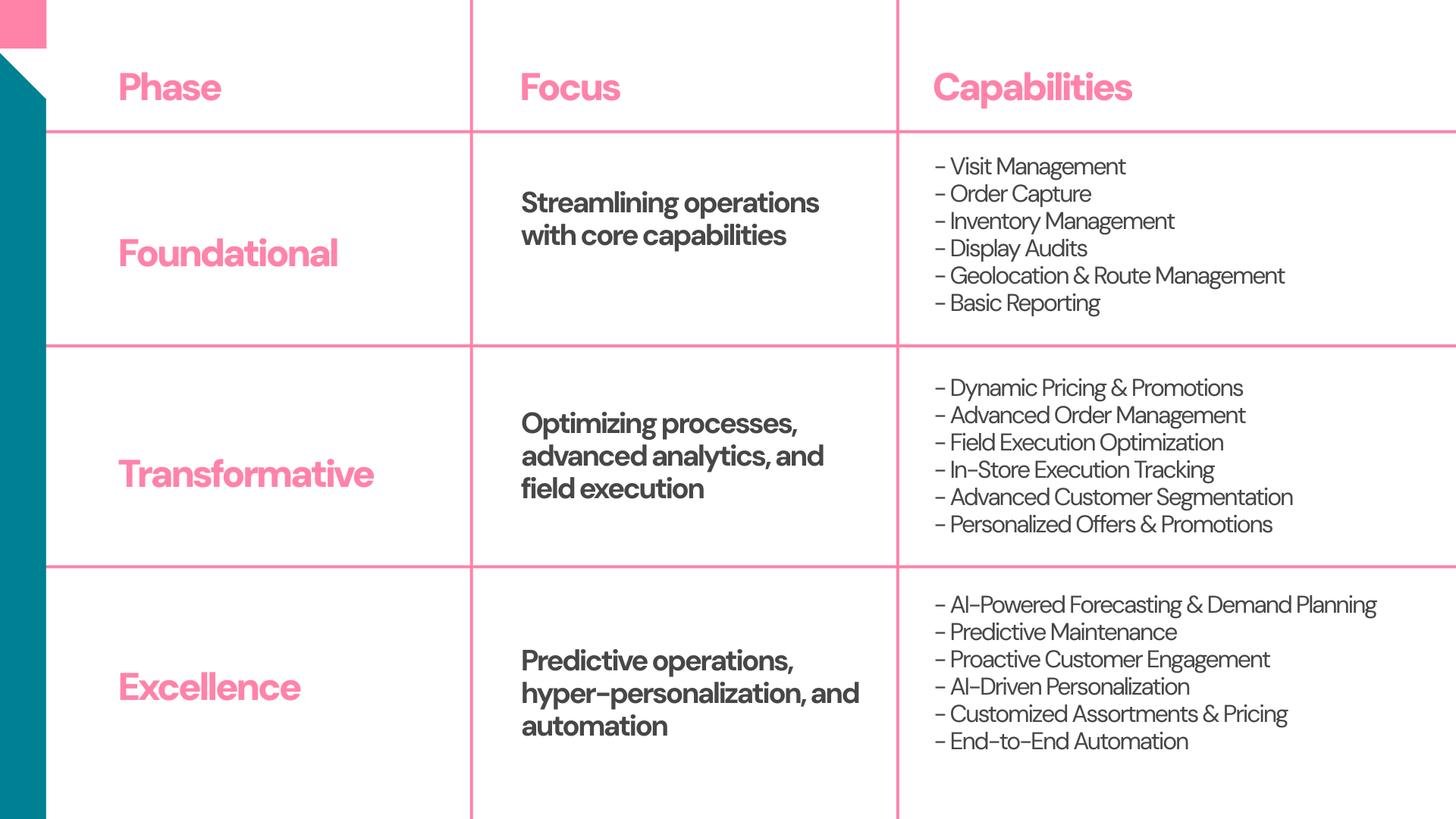
As part of your digital transformation journey, you will eventually reach the Excellence Phase—the pinnacle of success for Consumer Goods companies. In this final and most advanced stage, businesses evolve beyond basic optimization to fully unlock their digital potential, ensuring sustainable growth, long-term efficiencies, and industry leadership.
If you haven’t yet explored the previous Phases, we recommend starting with our article: Consumer Goods: The Path to Digital Excellence.
In this article, we’ll dive into the Excellence Phase for Consumer Goods organizations, highlighting the key capabilities that drive industry leadership and differentiate businesses from their competitors.
1. Proactive and Predictive Operations for Consumer Goods Companies
At the Excellence Phase, organizations don’t just react to customer needs—they anticipate them. This phase involves utilizing advanced technologies and data science to predict trends, optimize processes, and deliver proactive solutions.
- AI-Powered Forecasting and Demand Planning: Use artificial intelligence (AI) to predict future demand based on historical data, market trends, and customer behaviors. With accurate demand forecasts, businesses can optimize their supply chains and inventory management, ensuring products are available where and when customers need them.
- Predictive Maintenance for Field Service: Leverage IoT (Internet of Things) sensors and predictive analytics to monitor the health of field assets like refrigerators, dispensers, and shelves. By anticipating equipment failure before it happens, you can prevent costly downtime and maintain operational efficiency.
- Proactive Customer Engagement: Use AI and machine learning (ML) to predict customer needs and offer personalized recommendations and promotions before the customer even asks. This leads to more meaningful, targeted interactions that increase customer loyalty.
2. Achieving Hyper-Personalization at Scale
At this point, personalization reaches new heights. Businesses can tailor experiences not just for individual customers, but also for specific regions and stores, all at scale.
- AI-Driven Personalization: Beyond basic customer segmentation, businesses can now use AI to deliver hyper-personalized product recommendations, pricing, and promotions. This dynamic personalization ensures that each customer feels understood and valued, driving greater engagement and conversion rates.
- Customized Assortments and Pricing Models: Create tailored product assortments for individual stores, regions, or even customer segments based on data-driven insights. Pricing can also be adjusted dynamically, considering factors like customer preferences, competitor pricing, and location-specific demand.
- Omni-Channel Consistency: Ensure a seamless and consistent customer experience across all channels—whether physical stores, e-commerce platforms, or field sales teams. Customers expect a unified experience across all touchpoints, and achieving this consistency is a hallmark of excellence.
3. Building Intelligent and Agile Supply Chains
At this stage, Consumer Goods companies operate with an intelligent supply chain that adapts quickly to changing market conditions, customer demands, and operational challenges.
- Smart Inventory Management: Leverage real-time visibility across your entire supply chain to ensure that the right products are in the right places at the right time. Predictive analytics can help optimize stock levels, reduce waste, and avoid both stockouts and overstocking.
- Dynamic Distribution Models: Adopt flexible, data-driven distribution strategies that allow you to quickly pivot based on demand fluctuations. Real-time data about store inventory and product movement allows you to adjust distribution routes and inventory allocation dynamically.
- Sustainability and Efficiency: Use advanced analytics to optimize not only operational efficiency but also environmental impact. Reducing carbon footprints through smarter logistics and more sustainable practices is becoming a competitive advantage for companies that lead in the Excellence Phase.
4. End-to-End Automation for Seamless Operations
Automation plays a central role at this stage, minimizing manual tasks, boosting efficiency, and enabling employees to focus on strategic, high-value activities.
- Automated Sales Processes: From order entry to approval workflows, sales processes become completely automated. Sales reps spend less time on administrative tasks and more time engaging with customers. Automated notifications and alerts ensure that the sales cycle moves forward without delays.
- AI-Driven Replenishment: Stock replenishment is automated through predictive analytics that monitors inventory levels and forecasts product demand. This minimizes the chances of stockouts while optimizing inventory turnover.
- Automated Reporting and Analytics: Automated dashboards and reporting systems provide real-time visibility into performance metrics, with AI-driven insights surfacing critical trends and opportunities for improvement. This ensures that decision-makers always have up-to-date information at their fingertips.
5. Seamless System Integration and Real-Time Data Connectivity
In the Excellence Phase, integration across all systems and data sources is fully realized. Data flows seamlessly across platforms, departments, and organizations, enabling faster and more informed decision-making.
- End-to-End System Integration: Your Salesforce Consumer Goods Cloud system is fully integrated with your ERP, CRM, marketing platforms, and third-party systems. This holistic integration ensures that all data—whether it’s from sales, inventory, finance, or customer service—is easily accessible and actionable.
- Real-Time Data Syncing: All data is updated in real-time, enabling teams to access the latest information on stock levels, orders, customer preferences, and more. This connectivity streamlines workflows and enhances collaboration.
- APIs and Partner Ecosystems: Expand your capabilities by integrating with external platforms and technologies through APIs. The flexibility to integrate with partner ecosystems allows you to quickly adapt to new technologies and solutions that drive innovation.
Conclusion: Leading the Industry with Excellence
The Excellence Phase is where Consumer Goods companies truly shine. At this stage, businesses in the Consumer Goods industry are setting new standards for industry excellence. By leveraging AI, predictive analytics, and full-scale automation, companies create highly personalized experiences, optimize their supply chains, and maintain operational efficiency.
Those who reach this level of achievement aren’t just surviving—they’re leading the way. They’re reshaping what’s possible, continuously innovating, and delivering exceptional value in a competitive market.
Ready to Achieve Excellence in Consumer Goods?
Talk to a Cloudgaia expert and unlock your next phase of growth.