
By Florencia Cattelani, Chief Operations Officer at Cloudgaia
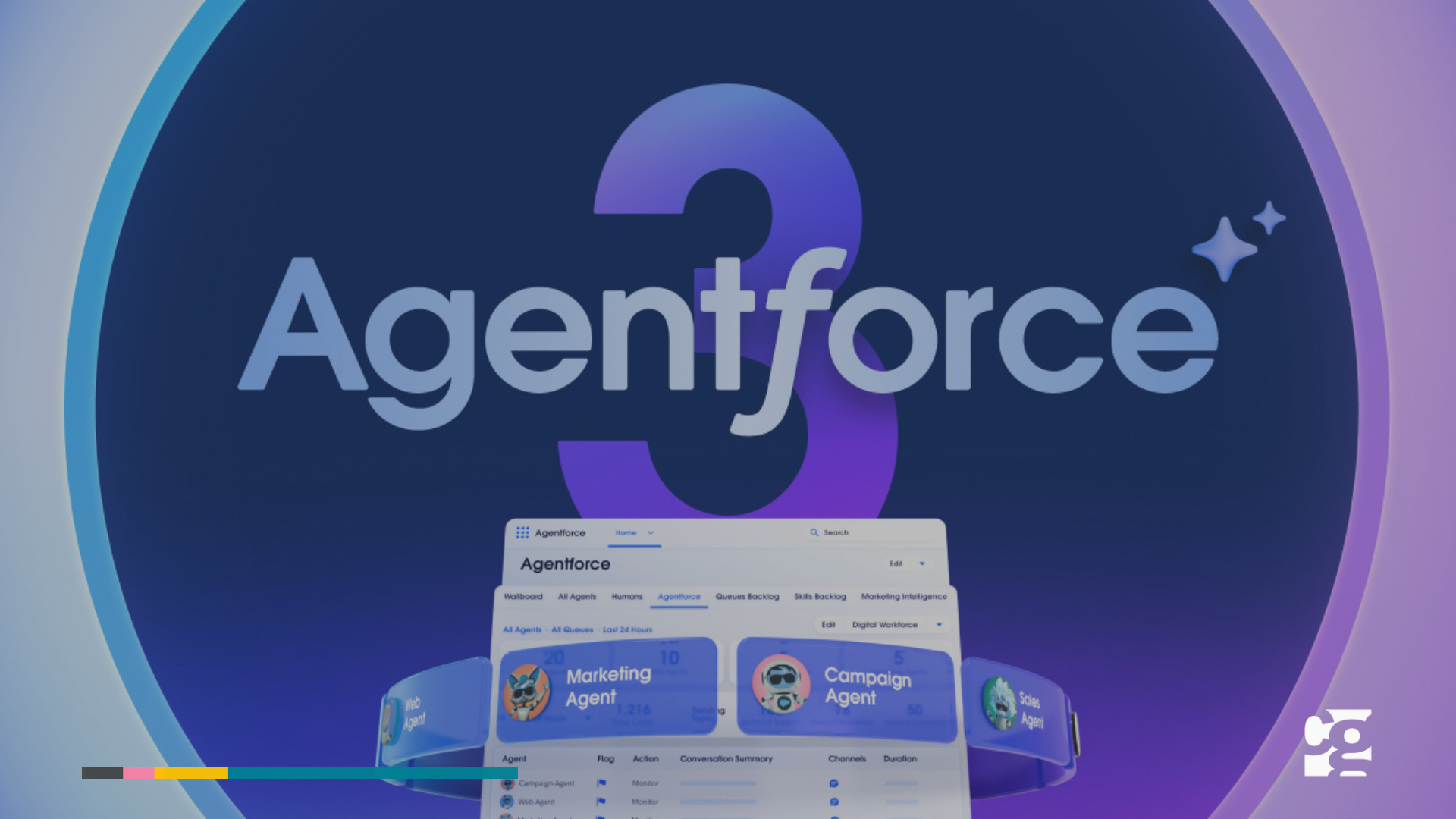
As the Chief Operating Officer at Cloudgaia, I’ve closely followed the advancements in artificial intelligence and their transformative potential for businesses. Salesforce has recently unveiled Agentforce 3, the latest iteration of its AI agent platform, which I believe is poised to redefine how businesses leverage artificial intelligence. This release addresses key concerns around visibility, control, and interoperability, aiming to accelerate the adoption and scaling of AI agents within enterprise environments.
Agentforce 3 introduces a suite of powerful new capabilities, including an advanced Command Center, enhanced Model Context Protocol (MCP) support, expanded partnerships on AgentExchange, and significant architectural improvements. This article delves into these innovations, exploring how they empower organizations to build, manage, and optimize a hybrid human-AI workforce with unprecedented clarity and efficiency.
Agentforce Command Center: Real-Time AI Agent Health Monitoring
One of the cornerstone features of Agentforce 3 is the introduction of the Agentforce Command Center. This observability solution provides customers with a comprehensive view of their AI agent ecosystem, enabling real-time monitoring of agent health and performance. The Command Center is designed to address the skepticism surrounding consumption costs and governance risks associated with AI deployments, offering a clear pathway to optimizing and refining agent performance through AI-powered recommendations.
The Command Center includes intuitive dashboards that track critical metrics such as agent adoption rates, success rates, operational costs, and user feedback. This granular insight allows businesses to understand precisely how their AI agents are performing and identify areas for improvement. All agent activity is meticulously captured through an extensible tracing model within Salesforce Data Cloud, facilitating real-time alerts and seamless integration with existing observability tools like Datadog and Splunk.
Furthermore, the Agentforce Studio now incorporates a Testing Center, allowing customers to build and test use cases using natural language before deploying them live. This feature significantly reduces the risk associated with new agent deployments, ensuring that agents are optimized for performance and accuracy from the outset. Initially, the Command Center will be rolled out for Service Cloud, with plans for expansion to other clouds and departments over time.
Key Capabilities of the Agentforce Command Center:
- Real-time Agent Health Monitoring: Track performance, error rates, and escalations with instant alerts.
- Adoption Insights: Understand agent usage patterns and identify areas for improvement.
- AI-Driven Optimization: Analyze interactions and receive AI-powered recommendations to enhance agent performance.
- Comprehensive Interaction Tracing: Built-in session tracing via OpenTelemetry and Data Cloud ensures enterprise-wide observability.
- Tailored Command Centers: View AI and human activity side-by-side, with initial availability in Service Cloud wallboards.
- Streamlined Testing: Use natural language to generate and simulate agent performance at scale.
The Command Center is a pivotal step towards demystifying AI agent operations, providing the transparency and control necessary for widespread enterprise adoption. It empowers organizations to measure the impact of their AI investments, optimize performance, and ensure a predictable return on investment.
Model Context Protocol (MCP) Support: Seamless AI System Interoperability
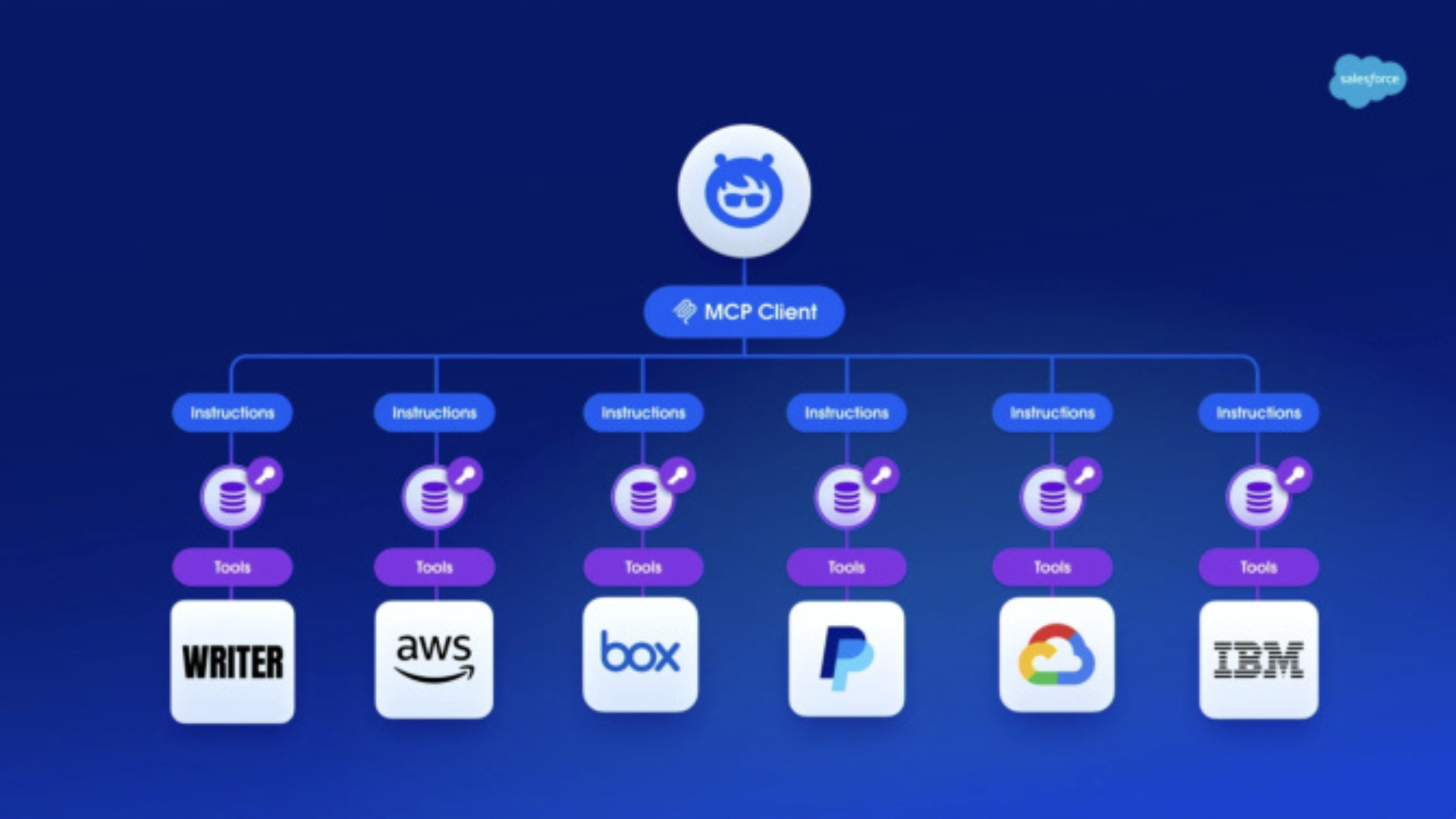
Agentforce 3 significantly enhances interoperability with external AI systems through its native support for the Model Context Protocol (MCP). This protocol acts as a universal connector, akin to a “USB-C for AI,” allowing Agentforce to leverage context from outside the Salesforce ecosystem and collaborate effectively with other AI agents.
The inclusion of a native MCP client server within Agentforce enables seamless connection to any MCP-compliant server, eliminating the need for custom coding. This capability is crucial for businesses that rely on a diverse set of tools and systems, as it allows AI agents to access enterprise tools, prompts, and resources while adhering to existing security policies. MuleSoft plays a vital role in this enhanced interoperability. With new MCP connectors, MuleSoft can instantly transform any API and integration into an agent-ready asset. This includes embedding security policies, activity tracing, and traffic controls, empowering teams to orchestrate and govern complex multi-agent workflows across their entire technology stack.
Furthermore, Heroku Managed Inference and AppLink facilitate the easy deployment, registration, and maintenance of custom MCP servers, providing a secure and scalable way to connect bespoke tools to Agentforce.
Key Aspects of MCP Support:
- Native MCP Client: Agentforce agents can connect to any MCP-compliant server without custom code.
- MuleSoft MCP Connectors: Convert any API into an agent-ready asset with builtin security and tracing.
- Heroku AppLink: Simplifies the hosting and management of custom MCP servers.
- Secure Agent Actions in Slack: Future integration will allow Agentforce agents to interact with Slack messages and files via an MCP server, respecting enterprise permissions.
- Unified Agent Gateway: A governed gateway centralizes agent registration, identity, and policy management, ensuring adherence to security and compliance standards.
This robust MCP support is a testament to Salesforce’s commitment to an open ecosystem approach, which is instrumental in scaling AI agent deployments with confidence. It ensures that agents can take meaningful action within the tools businesses already use, without compromising on security or control.
Expanded Agentforce Partnerships: A Thriving AI Agent Ecosystem
Building on the success of its existing AgentExchange, Salesforce Agentforce 3 further expands its partner ecosystem, making it easier for customers to discover and integrate AI agent solutions. AgentExchange, envisioned as an AI alternative to the AppExchange, provides a platform for companies to rapidly create and deploy AI agents that enhance productivity, efficiency, and innovation across various industries.
With this latest update, customers can now find MCP servers from over 30 partners and third-party tools that can be seamlessly connected to Agentforce through a secure AI agent gateway. This expansion signifies a crucial step towards a more mature and scalable AI agent ecosystem, offering businesses a wider array of trusted tools and resources. Launch MCP partners include industry giants such as AWS, Box, Cisco, Google Cloud, IBM, Notion, PayPal, Stripe, Teradata, and WRITER.
These partnerships enable a multitude of real-world use cases, demonstrating the practical applicability and value of Agentforce 3 in diverse business scenarios.
Examples of Partner-Enabled Use Cases:
- PayPal: Service teams can automate invoice generation and process transactions via PayPal’s MCP server, including creating compliant invoices and notifying customers with attached documents.
- WRITER: By connecting to the WRITER MCP server, Agentforce facilitates automated content creation, knowledge retrieval, and compliance checks within Salesforce workflows.
- Box: Agentforce can support content teams by automatically retrieving signed NDAs from Box, summarizing key terms, and providing updates to account teams via Slack.
These examples highlight how AgentExchange, with its expanded partnerships, is evolving from an early-stage directory into a robust and scalable ecosystem, delivering high-value use cases to customers.
Salesforce Agentforce 3 Architecture: Enhancing Performance and Flexibility
Agentforce 3 introduces significant updates to its underlying architecture, particularly the Atlas Reasoning Engine, which serves as the brain behind Agentforce. These enhancements are designed to deliver unmatched enterprise readiness, including lower latency, greater accuracy, enhanced resiliency, and broader support for natively hosted Large Language Models (LLMs).
Salesforce has achieved a remarkable 50% reduction in latency over the past five months, with response streaming now generally available. This means users can experience faster and more responsive interactions with AI agents, seeing answers generated in real-time. In terms of LLM support, Agentforce 3 expands its offerings beyond OpenAI. It now includes support for Anthropic’s Claude Sonnet model via AWS Bedrock, specifically targeting regulated industries that require stringent data governance and security. Furthermore, Salesforce has announced that Google Gemini will also be supported in Agentforce later this year, providing customers with even greater choice and flexibility in their AI model selection.
Another crucial enhancement is the availability of web search as a data source for Agentforce. This feature allows agents to find more relevant information from the internet and provides inline citations to ensure transparency and traceability of information sources.
Agentforce’s infrastructure availability has also been significantly expanded, now reaching Canada, the UK, India, Japan, and Brazil. In addition, the platform now supports six new languages (French, Italian, German, Spanish, Japanese, and Portuguese), with plans to roll out 30 additional languages in the coming months. This global expansion and multilingual support make Agentforce more accessible and valuable to a wider range of international businesses.
Finally, the updated architecture ensures always-on reliability. If one model experiences slowdowns or failures, Agentforce will automatically switch to another in the background, guaranteeing continuous performance and minimizing disruptions.
Key Architectural and LLM Enhancements:
- Reduced Latency: 50% faster response times with real-time streaming.
- Expanded LLM Support: Integration with Anthropic’s Claude Sonnet (via AWS Bedrock) and upcoming support for Google Gemini.
- Web Search as Data Source: Agents can leverage web search for more relevant information, with inline citations.
- Global Infrastructure Expansion: Availability in new regions and support for multiple new languages.
- Enhanced Reliability: Automatic model switching ensures continuous performance.
These architectural advancements underscore Salesforce’s commitment to providing a robust, high-performing, and adaptable AI agent platform that can meet the evolving demands of enterprise-scale AI deployments.
Industry-Specific Agentforce Capabilities: Tailored AI Solutions for Various Sectors
Agentforce 3 introduces a range of industry-specific capabilities, demonstrating Salesforce’s commitment to providing tailored AI solutions that address the unique needs of various sectors. These specialized features enable businesses to quickly realize value and optimize their operations with minimal setup.
One significant development is the achievement of FedRAMP High Authorization for Agentforce, making it available to public sector customers through Gov Cloud Plus. This authorization ensures that government agencies can leverage Agentforce with the highest levels of security and compliance.
Salesforce has also rolled out Agentforce for Net Zero Cloud, designed to assist organizations in their sustainability efforts. This capability helps businesses gather sustainability insights, monitor carbon footprints, and automate disclosure responses to regulating bodies, contributing to more efficient and accurate environmental reporting.
Additionally, Agentforce 3 offers targeted solutions for several key industries:
- Consumer Goods Cloud: Enables inventory checks, tracks store and product performance, schedules customer visits, and enhances customer service.
- Financial Services: Automates pre and post-meeting tasks, and provides specialized banking service, financial advisor, and insurance service assistance agents.
- Communications: Features a Billing Resolution agent that integrates with thirdparty billing systems to help resolve billing disputes efficiently.
- Health Cloud: Includes a Contact Center agent and an assistive agent to help contact center representatives integrate data from Electronic Medical Record (EMR) systems, improving patient care coordination.
- Manufacturing: Offers a Sales Planning agent, a Proactive Service/Maintenance agent, and an Inventory Management agent to streamline operations and enhance efficiency.
These industry-specific capabilities, along with over 100 new pre-built industry actions rolling out in Summer 2025, ensure that teams can deploy AI agents with minimal setup across a wide range of sectors, accelerating time to value.
Salesforce is also simplifying pricing with new SKUs for Sales, Service, and Industry Cloud, and offering per-user pricing with unlimited usage for employee-facing agents, making it easier to scale without worrying about usage limits.
Additional MuleSoft Updates: Powering Multi-Agent Workflows
MuleSoft continues to be a critical component of the Salesforce ecosystem, and Agentforce 3 brings several key updates that further enhance its role in enabling seamless multi-agent workflows. These updates are designed to improve communication between agents and extend development capabilities. One significant addition is the MuleSoft A2A Connector (Agent-to-Agent). This connector enables direct communication across any agent by exposing them as either an A2A server or client. This facilitates more complex and collaborative AI agent interactions, allowing different agents to work together more effectively to achieve common goals.
Furthermore, Anypoint Code Builder now includes IDE Support, extending MuleSoft’s development capabilities to any MCP-supported Integrated Development Environment (IDE), such as Cursor or Windsurf. This integration streamlines the development process for multi-agent solutions, making it easier for developers to build and deploy agent-ready assets.
Finally, MuleSoft introduces Anypoint Exchange AI-generated Documentation. This feature automates the generation of standardized API documentation at the time of publication, significantly reducing the manual effort involved in maintaining up-to-date documentation and ensuring consistency across APIs. These MuleSoft updates underscore Salesforce’s commitment to providing a comprehensive and integrated platform for building, managing, and scaling AI agent solutions, from individual agent capabilities to complex multi-agent orchestrations.
Conclusion: Scaling AI for Enterprise with Salesforce Agentforce 3
Salesforce Agentforce 3 represents a significant leap forward in the realm of enterprise AI agent management. By addressing critical challenges related to visibility, control, and interoperability, Salesforce is paving the way for broader adoption and more impactful deployment of AI agents across diverse industries.
The introduction of the Agentforce Command Center provides unprecedented insights into agent performance, while enhanced MCP support and expanded AgentExchange partnerships foster a truly interconnected AI ecosystem. Coupled with architectural improvements that deliver faster performance, greater flexibility in LLM choice, and expanded global reach, Agentforce 3 empowers organizations to confidently embrace the future of a hybrid human-AI workforce. As businesses continue to navigate the complexities of AI integration, Agentforce 3 offers a robust and comprehensive platform to unlock the full potential of agentic AI, driving efficiency, productivity, and innovation at scale.
To further understand how Agentforce can optimize not only agent management but also improve your team’s sales and productivity, we invite you to read our article on how Agentforce boosts your sales with AI.
Cloudgaia’s Perspective: Navigating the Future of AI with Agentforce 3
From Cloudgaia’s perspective, the innovations introduced in Salesforce Agentforce 3 mark a crucial milestone in the evolution of enterprise artificial intelligence. The integration of a robust Command Center, native support for the Model Context Protocol (MCP), and the expansion of AgentExchange not only address the critical challenges of visibility and control that we have observed in AI adoption but also unlock a vast array of possibilities for interoperability and scalability.
We firmly believe that these advancements will empower businesses not only to optimize their current operations but also to explore new frontiers in human-AI collaboration, driving unprecedented efficiency and decision-making. At Cloudgaia, we are committed to guiding our clients in the strategic implementation of these capabilities, ensuring they maximize their AI investment and significantly transform their businesses.
Ready to Scale Your AI Agent Operations with Salesforce?
Talk to a Cloudgaia expert to learn how Agentforce 3 can transform your business and help you unlock the full potential of Salesforce.
References
Salesforce. (2025, June 23). Salesforce Announces Agentforce 3. Retrieved from https://www.salesforce.com/news/press-releases/2025/06/23/agentforce-3-announcement/
Salesforce Ben. (2025, June 22). Salesforce Announces Agentforce 3: Command Center, MCP, and Apps. Retrieved from https://www.salesforceben.com/salesforceannounces-agentforce-3-0-command-center-mcp-and-apps/